A keyboard that learns how you type.
Types what you meant. Every key knows how far you pressed it, and Noma tunes each one to the way you type. Fewer mistakes, nothing to set up.
Occasional build updates. No spam, unsubscribe anytime.
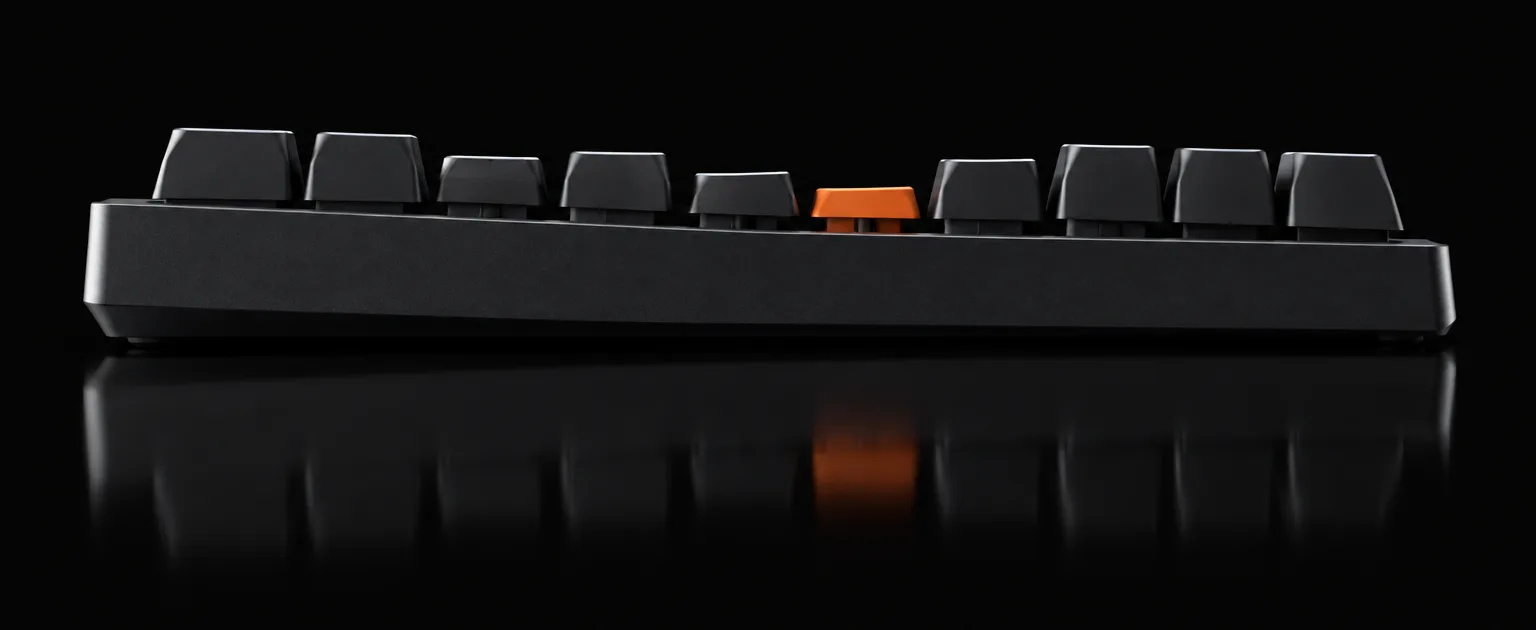
Concept render. Every key reports how far it went.
01 · Inside
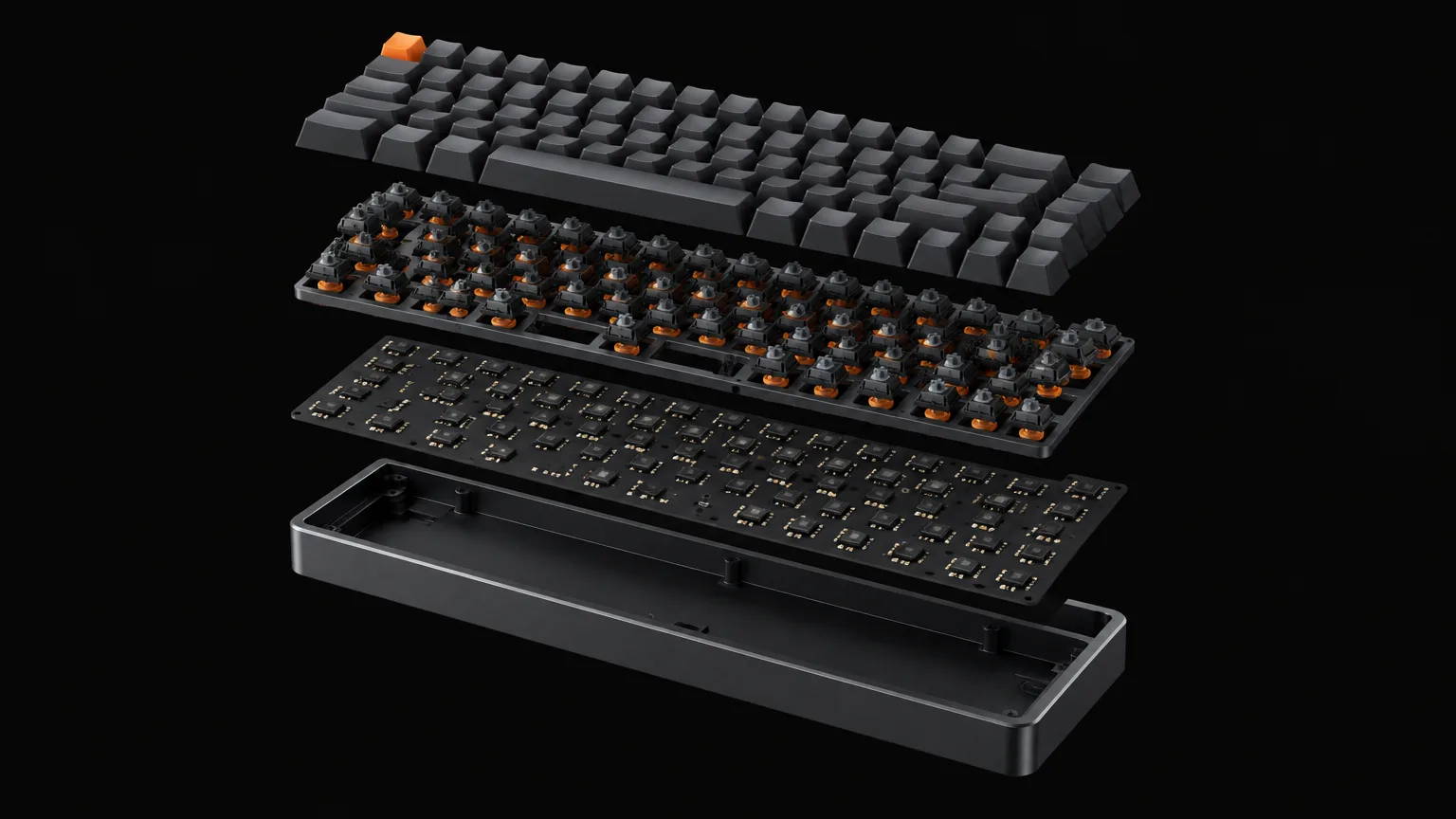
A magnet and a sensor under every key.
Ordinary keyboards only know whether a key is down. Every Noma key carries a small magnet, with a sensor underneath that reads it.
- 1
Keycaps
Legend-free, one orange key.
- 2
Magnetic switches
A small magnet rides in every key.
- 3
A sensor per key
Reads that magnet the whole way down.
- 4
Aluminium case
A solid, quiet base.
02 · Sensing
The sensor reads the whole press.
As a key goes down, its magnet closes in on the sensor. Noma tracks every fraction of a millimetre, not just on or off.
Step 2 of 3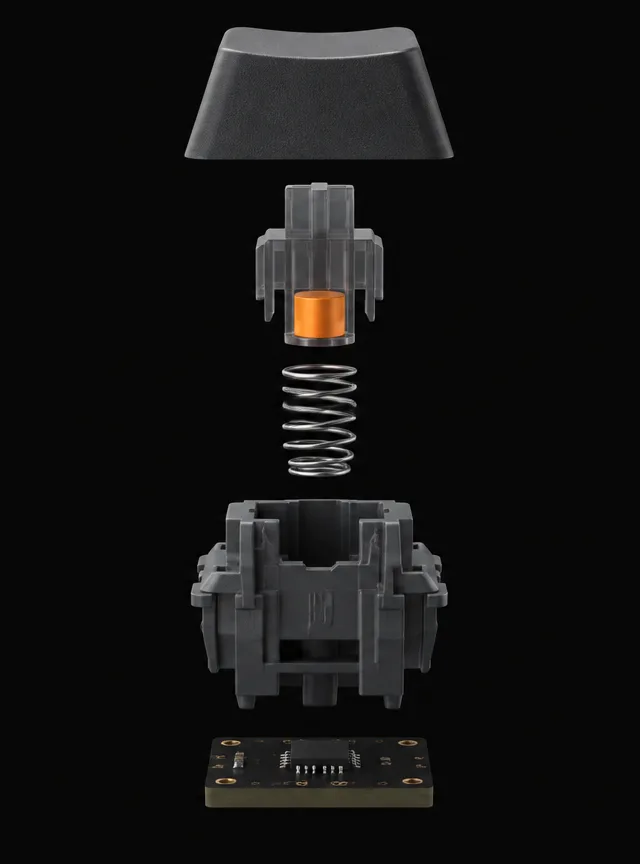
Key depth
0.00mm
Not yet
03 · Learning
Then it tunes every key to the way you type.
It learns how you actually press each key, whichever finger you use, and moves that key’s actuation point to match. Fewer missed keys. Fewer accidental ones. Nothing to set up.
Step 3 of 3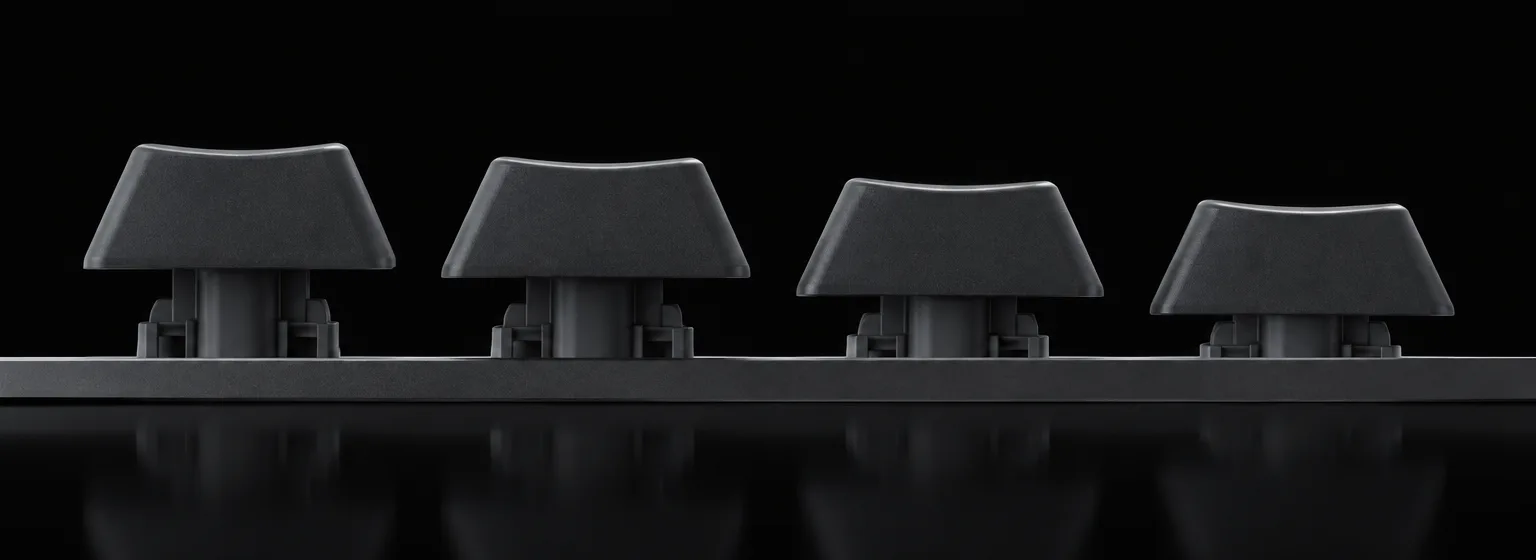
Every key starts at 2.0 mm. Each one settles where you actually press it.
The result
Fewer missed keys. Fewer accidental ones.
The same press can be right for one key and wrong for another. Tuned key by key, your keyboard stops guessing.
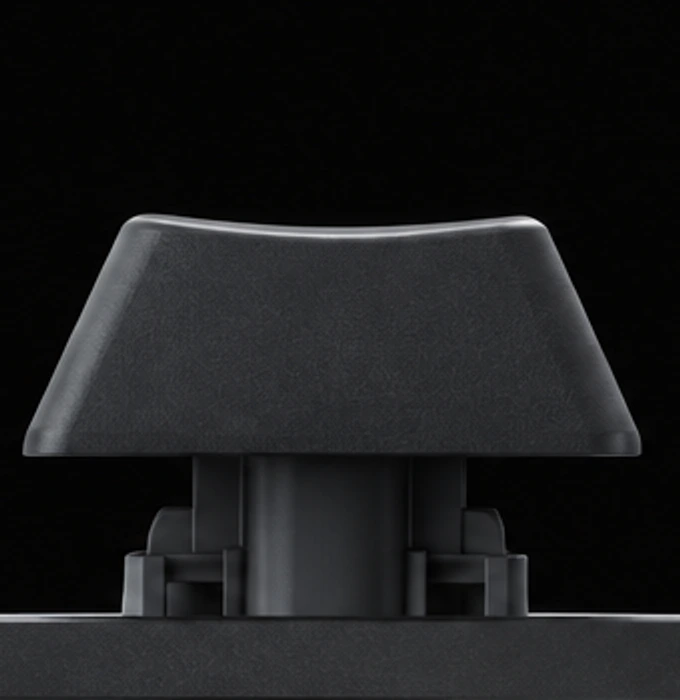
This press stopped at 1.6 mm, where the key sits.
Default:Missed
Yours:Types
Missed key, caught
A light press stops at 1.6 mm, short of the usual 2.0 mm, and the letter never appears. Tuned to how you press that key, it types.
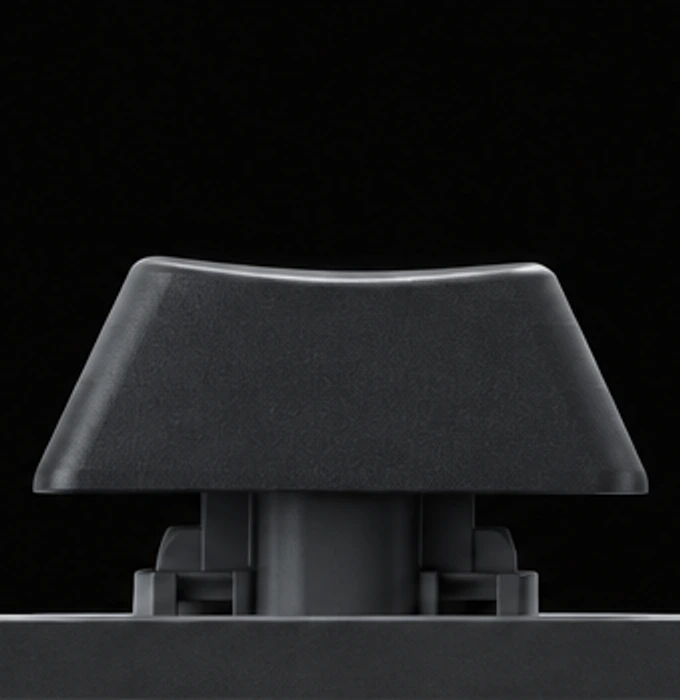
This press stopped at 2.3 mm, where the key sits.
Default:Stray letter
Yours:Ignored
Accidental key, ignored
A finger brushes the key next door, 2.3 mm deep. At 2.0 mm that’s a stray letter. Tuned deeper for that key, it stays quiet.
Every key, measured
A magnet and a sensor under each key read the whole press.
Tuned to how you type
Each key’s actuation point moves to where you actually press it.
Just a keyboard
Plug it in and type on any computer. No app needed.
Yours, and private
It learns on the keyboard. No account, no subscription.
Why it tunes itself
The right setting is different for every key.
And for every person. So instead of asking you to set it, Noma learns it.
01
No numbers to guess
Magnetic keyboards already let you set every key by hand. Almost nobody does, because there’s no way to know the right depth for your pinky. Noma works it out from how you type.
02
It keeps up with you
You type differently when you’re tired, at a new desk, or on new keycaps. A setting you picked once goes stale. Noma keeps learning, so the tuning follows you.
03
Weak fingers, covered
A light pinky press on A or P still counts, and every other key stays as calm as you need it. One fixed point can’t do both.
Made for
Fast typists
Fewer stray letters, fewer trips to Backspace.
Laptop switchers
Light, shallow presses still land.
Unsteady hands
Accidental brushes get tuned out, key by key.
Gamers
Typing and games each get their own tuning.
How many mistakes does it actually fix? We’re measuring it first.
Before claiming a number, Noma is logging real everyday typing to count how many mistakes come from missed and stray presses. The result gets shared, whatever it is.
Be one of the first to type on it.
Join the waitlist for build updates and a first look when it’s ready.
Occasional build updates. No spam, unsubscribe anytime.
Built in public
Noma is designed by one person, in the open. Every test and every wrong turn gets shared as it happens.
Product images are concept renders. Drawings and numbers illustrate how tuning works; they are not measurements or specifications.